Projects · 13 September 2026
Flooring
Whether you are establishing a permanent pitch or planning occasional weekend camping, choosing the right flooring will make a considerable difference to how a yurt or tipi performs throughout the year. A range of option
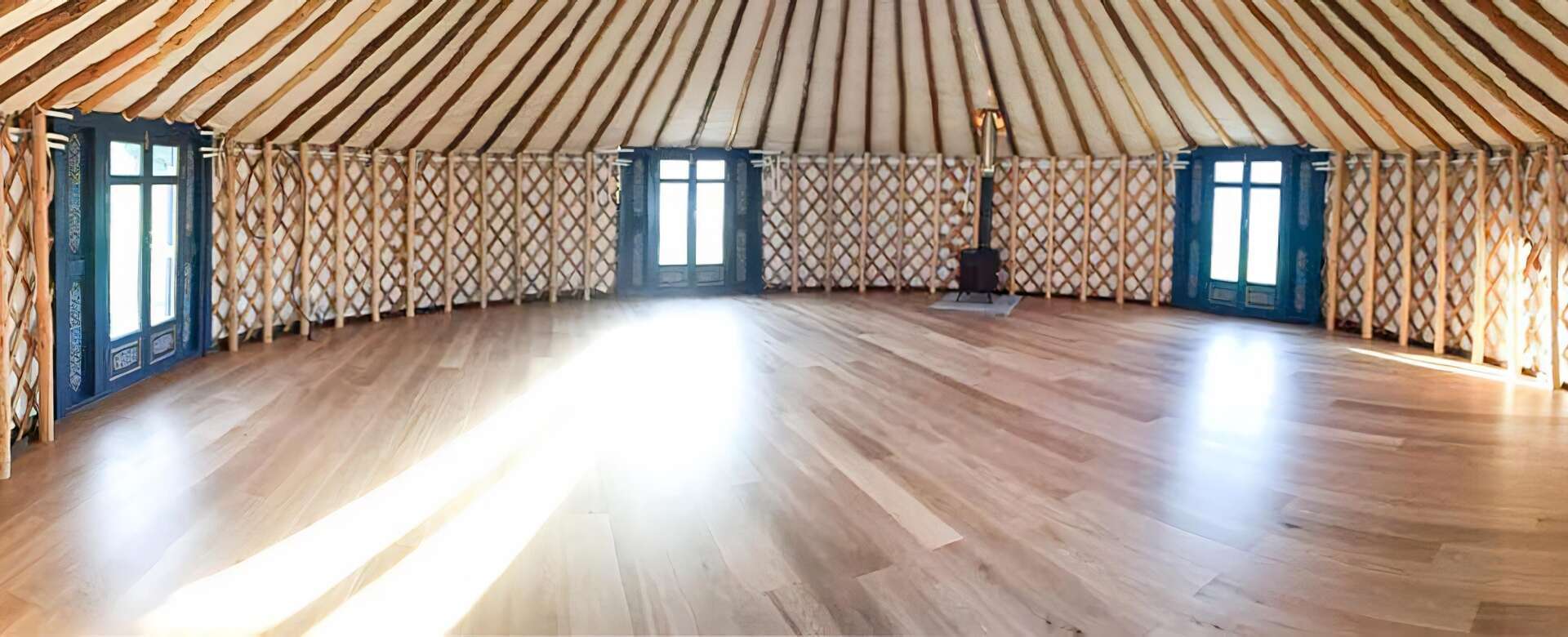
Whether you are establishing a permanent pitch or planning occasional weekend camping, choosing the right flooring will make a considerable difference to how a yurt or tipi performs throughout the year. A range of options is available, from simple groundsheets to fully designed platform and decking systems, along with custom extras to suit individual sites.
Waterproof groundsheets
Every structure can be supplied with a heavy-duty PVC groundsheet, and these come in a wide choice of colours. In a yurt, the groundsheet is made with an upstand around the edge, which the trellis walls sit inside. Tipis are usually given a flat groundsheet, although where a fire pit is to be used, the sheet can be cut away in the centre to accommodate it. A groundsheet of this kind is the simplest way to keep the interior dry and free from damp rising from the ground.
Coir matting
Coir matting, made from coconut fibre, is a natural and inexpensive floor finish well suited to both tipis and yurts. It is hard wearing, naturally fire-resistant, organic and biodegradable. Matting can be manufactured to the exact size of the structure and generally arrives as two overlapping semi-circles.
Platform and decking floors
A solid floor lifts tipi and yurt living to a different level of comfort. Platforms and decking transform the space and are particularly suitable for a permanent site. A wooden floor underfoot is an increasingly popular way of making a tipi or yurt usable across all seasons in the UK.
Site preparation and groundwork
The ideal site is level, reasonably compacted and well drained. Where those conditions are met, only simple preparation is needed before the floor goes down, typically removing a few inches of topsoil, laying a weed-suppressing barrier and adding a layer of gravel or hardcore. It is preferable for the customer to carry this out before the installation team arrives, though it can be done as part of the work at additional cost.
An uneven site need not rule out a platform floor. The uprights between the deck blocks and the sub-frame can compensate for ground that is not level.
Footings and floating floors
Platform designs use a system of precast concrete deck blocks to anchor the sub-frame. This approach reduces the amount of groundwork needed for foundations and copes well with gradients. When properly installed, the deck blocks create a versatile flooring system, allowing the floor to sit as close to or as far from the ground as the site requires.
All circular floors are built on a structural framework of treated exterior-grade timber. Permanent yurt installations generally use weatherproof chipboard, while tipis and seasonal yurts are usually better served by decking board.
Surfacing options
Where a structure will stand all year round and the surface will not be exposed to the elements, weather-resistant tongue-and-groove chipboard is used. This eliminates draughts and works well alongside the heavy-duty PVC groundsheet. Carpet or coconut matting can be laid on top of the groundsheet, as can a floating laminate floor.
Outdoor decking suits tipis particularly well, and the tipi poles generally sit on the ground around the deck. For a yurt used only seasonally, exterior decking in treated softwood or hardwood is recommended. Decking allows the floor to be left exposed to the weather without suffering unduly when the structure is not up.
Custom design and bespoke features
Decking and flooring options can include bespoke design work and extras such as disabled access ramps, insulated sub-frames, porches, handrails, solid wood and laminate internal floors, and plumbing and drainage.
Quotations
Flooring installations are quoted for individually, after discussion of your needs and consideration of the site. Get in touch to arrange a personalised quotation.